
Artificial intelligence is changing how local businesses gain visibility. If your business isn’t showing up in AI-generated answers, you’re losing customers to competitors who are. Here’s how the local search landscape has shifted-and what you can do about it right now.
Key Takeaways
- AI powered search tools like google ai overviews, Gemini, ChatGPT, and Perplexity are now major gatekeepers for local discovery. Being visible locally is no longer just about ranking on Google Maps.
- Local visibility now means being named, cited, or recommended inside ai driven search results and ai summaries when users ask “near me” or recommendation-style conversational questions.
- Businesses need both strong local seo foundations (google business profile, reviews, NAP consistency, schema markup) and AI-friendly content (conversational Q&A, structured data, clear answers) to stay visible.
- AI systems draw on wider digital signals than traditional search ever did: website content, review sites, social proof, local directories, and consistent engagement data across the web.
- This article outlines concrete, practical steps to protect and grow your local visibility in the age of ai search.
Why Local Visibility Matters More Than Ever in 2025–2026
Local search behaviour has fundamentally changed. Post-pandemic, more people rely on mobile devices for immediate local discovery, and a growing number now begin their customer journey by asking an AI assistant rather than opening a browser. Over 46% of all Google searches already have local intent, and voice searches are 76% more likely to be local than text-based ones.
For service-based and bricks-and-mortar businesses, this means footfall, phone calls, and bookings increasingly depend on whether AI “sees” and trusts you. Consider these realities:
- In the U.S., google ai overviews trigger on roughly 22% of local-intent queries in 2026, and that figure is climbing by 1–3 percentage points per quarter.
- When AI Overviews appear, organic click-through rates can drop by up to 60% for traditional result listings.
- By 2028, an estimated $750 billion will flow through ai search.
- Local visibility now spans Google Maps, AI Overviews, chat-based ai tools, voice assistants (Siri, Alexa), and social search on TikTok and Instagram-all of which use ai systems under the hood.
If AI doesn’t surface your business, nearby customers are steered to competitors before they ever find your website.
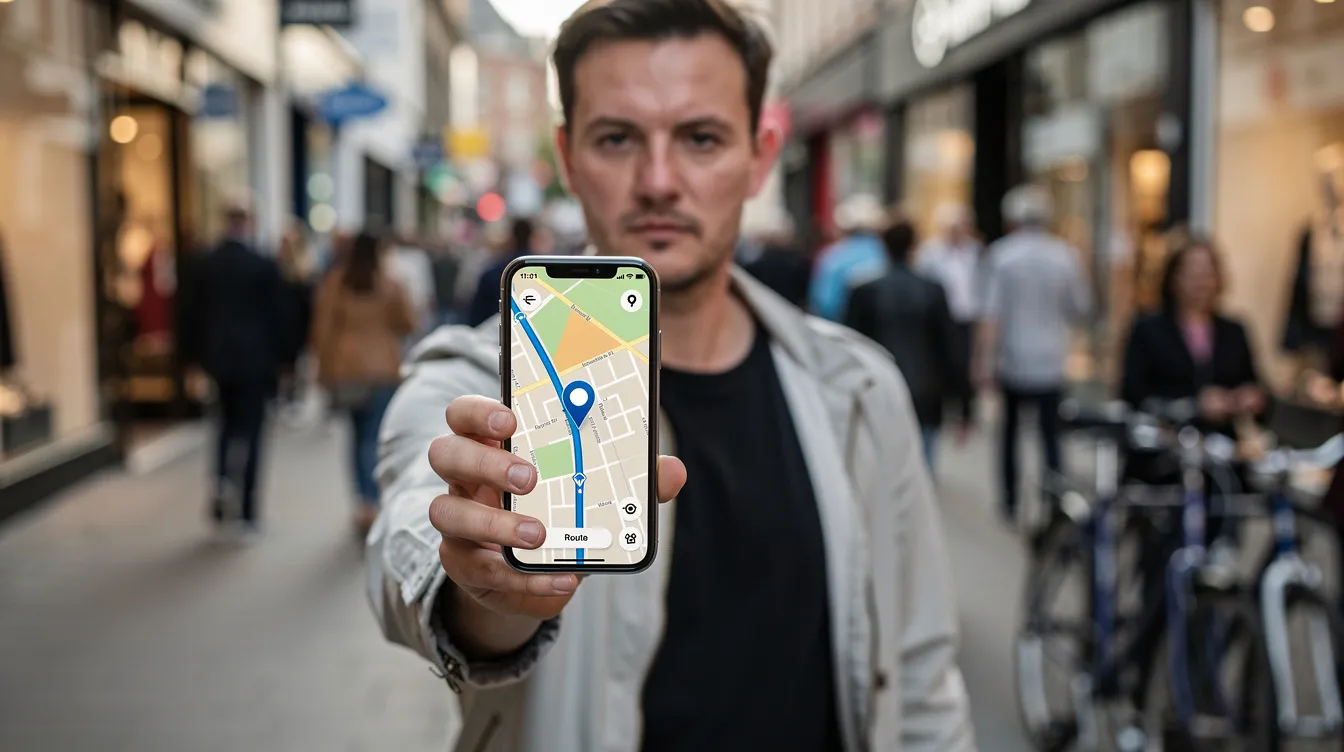
From Blue Links to AI Answers: How AI Search Works Now
Traditional search showed you ten blue links and a map pack. AI powered search does something fundamentally different: it synthesises a direct answer from multiple sources, instead of providing lists of websites.
Here’s how ai driven search works in practice:
- Data gathering: Tools like google ai overviews, Gemini, ChatGPT, and Perplexity pull information from websites, google business profile listings, reviews, directories, and structured data. AI systems pull from an average of 11.62 sources for a single response.
- Answer synthesis: The AI compiles a summary answer that blends what many sources say about a topic or business.
- Shortlisting: It presents a shortlist of recommended local businesses-typically just 3–5 options.
- Citations: It cites a small set of sources or snippets alongside its response.
AI search visibility means appearing in those answers and citations. Simply having a web page indexed somewhere in organic search results is no longer enough. These are answer engines, not link directories. AI search tools directly answer user needs instead of providing lists of websites.
How AI Is Changing Local Search Behaviour
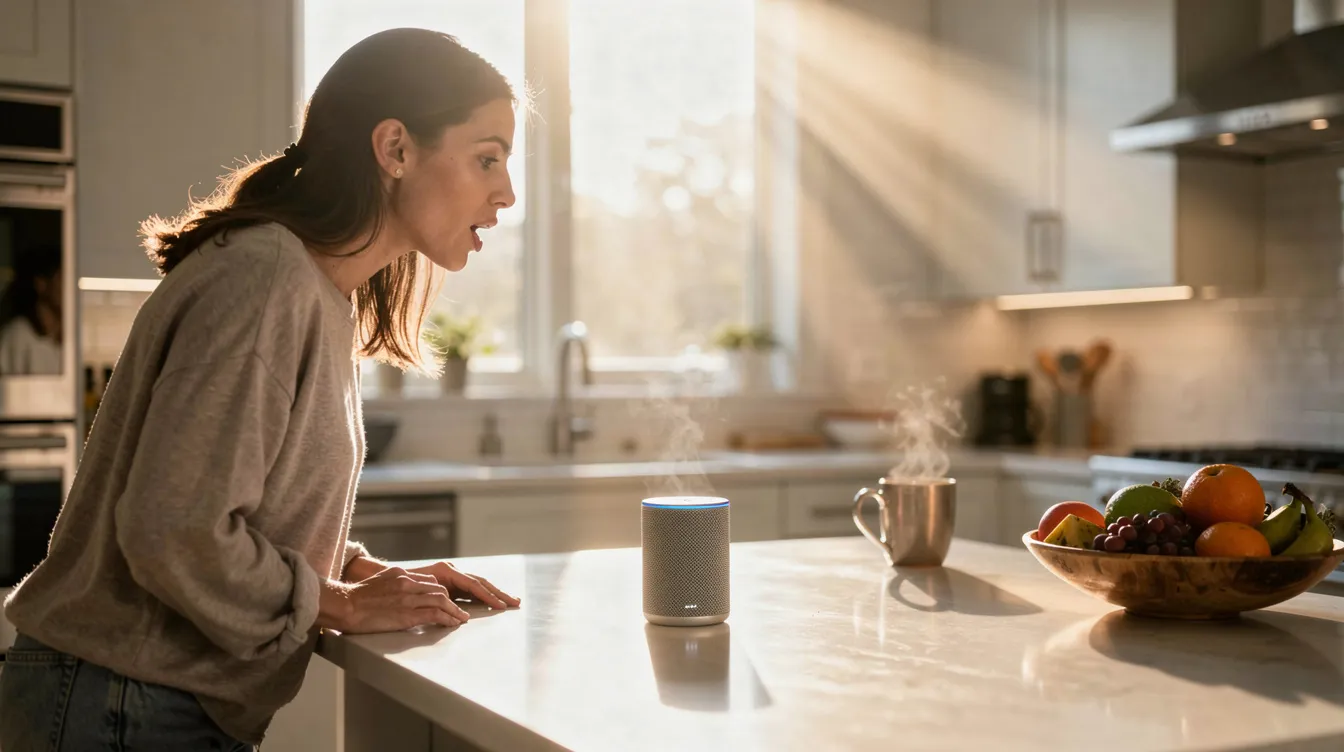
Everyday users now talk to AI like a local expert. Instead of typing “plumber Manchester,” people talk naturally: “find me an emergency plumber near me right now” or “best café in Glasgow for remote work with good Wi-Fi.”
Conversational search is increasing as users ask natural language questions for local services. Consumers increasingly use AI agents to ask specific questions in natural language, combining location, service type, and personal preferences in a single prompt. For example: “family dentists in Leeds with great reviews and payment plans.”
AI search considers context-time of day, device, past behaviour, and precise location-which changes which local businesses get surfaced. AI chatbots typically recommend only 3–5 businesses, increasing competition for top spots. Voice-based queries via Siri, Google Assistant, and Alexa are increasingly routed through ai powered search and expect conversational, natural-language answers.
What Is AI Search Visibility for Local Businesses?
AI search visibility refers to how often, and in what context, ai systems mention, cite, or recommend your business when users ask questions. AI search visibility measures brand mentions in AI-generated responses.
This is different from classic search visibility, which tracks keyword rankings, impressions, and clicks from search engines. AI visibility is about being surfaced in the answer itself-even if no click follows. The focus in local search is shifting from ranking to being recommended by AI.
Key components of ai visibility include:
- Citation frequency: How often your brand appears in AI-generated answers.
- Positional prominence: Whether you’re first or last in a shortlist.
- Intent alignment: Whether AI connects your services to the right user questions.
- Trust indicators: Sentiment, authority, and social proof associated with your brand.
According to SOCi’s 2026 Local Visibility Index, only 1% to 11% of business locations are recommended by ai assistants like ChatGPT, Gemini, or Perplexity. And 89% of B2B buyers use AI platforms for research before purchasing-so this isn’t just a consumer phenomenon.
The New AI Gatekeepers in Local Discovery
Local discovery is now mediated by several ai powered gatekeepers, not just Google’s traditional algorithm.
- Google AI Overviews sit above the traditional local pack in many markets, reshaping which businesses users see first. AI Overviews can push traditional organic results further down search pages, reducing visibility for everyone else.
- Gemini, ChatGPT, and Perplexity act as research assistants that compile local ai recommendations, blending data from maps, websites, and review sites.
- Social platforms like TikTok and Instagram use AI-driven recommendation engines that amplify or dampen local brand visibility based on engagement signals.
To win local customers, your brand appears consistently across all of these ai powered touchpoints-not just one.
How AI Systems Evaluate Local Businesses
AI doesn’t see your shopfront. It sees data, consistency, and trust signals scattered across the web. AI uses predictive analytics to identify patterns in local search behavior, and AI technology alters local search visibility by focusing on content credibility and entity verification.
Main signal categories include:
- Business data accuracy: NAP (Name, Address, Phone), opening hours, categories, attributes. Over 80% of businesses have inconsistent information across AI models-a major problem.
- Review quality and recency: Volume, sentiment, specific keywords in review text. AI models weigh customer reviews and sentiment heavily when ranking local businesses.
- Content quality: Clear, well-structured service pages. AI prefers content that is clear, structured, and authoritative.
- Structured data: Schema markup that helps AI parse your offering.
- Behavioural signals: AI analyzes user behavior as a content quality signal. User interaction data helps AI understand content engagement levels, and user feedback influences how AI ranks local business content.
Critically, 95% of ChatGPT citations come from content less than 10 months old. Freshness matters enormously. AI systems cross-check your google business profile, website, directories, and social profiles for consistency and authority before recommending you.
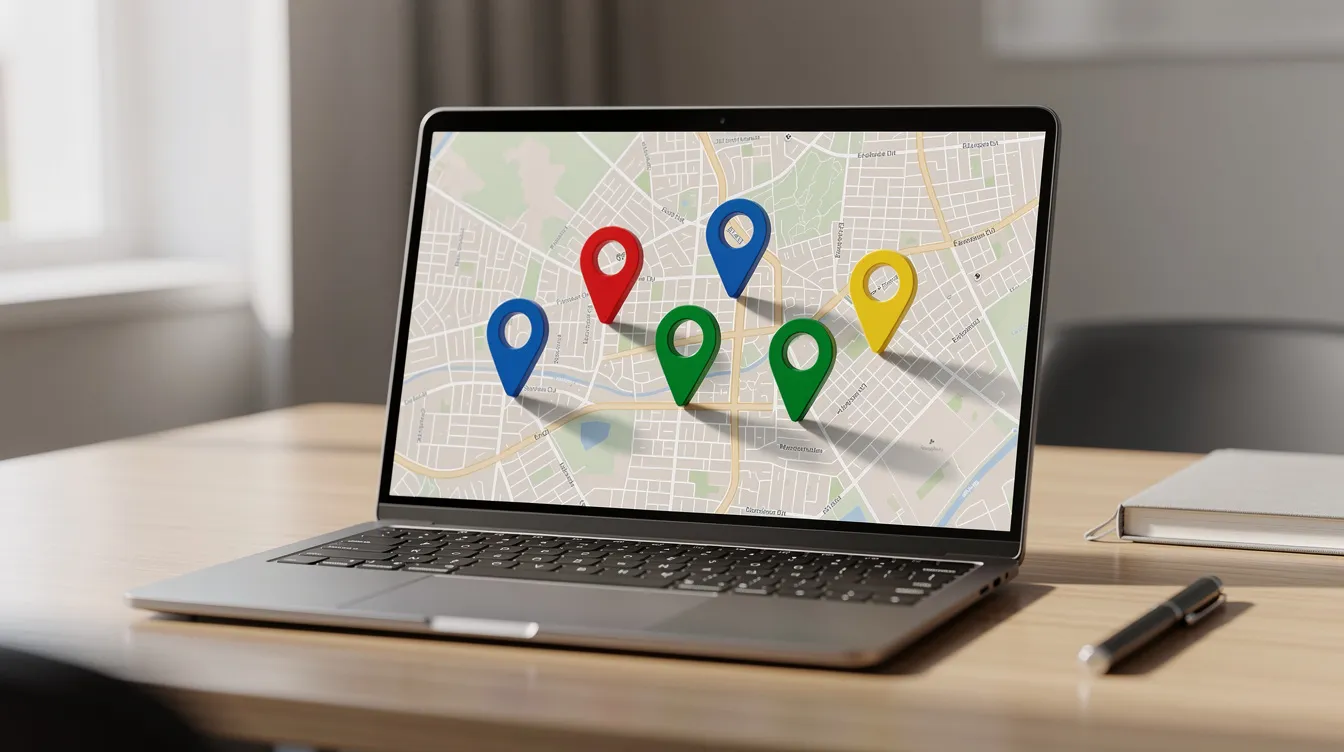
Key Ranking & Trust Signals in AI‑Driven Local Search
While algorithms are complex, a handful of practical levers strongly influence ai driven local visibility:
Signal | What it means for AI |
|---|---|
Google Business Profile | Complete, accurate, regularly updated profiles with photos and posts |
Reviews & ratings | High volume, recent, keyword-rich reviews across platforms |
On-site content | Detailed, question-answering service and location pages |
Citations & directories | Consistent NAP across trusted directories and editorial sites |
Engagement metrics | Clicks, calls, directions, social interactions |
Businesses with complete profiles have competitive advantages in ai visibility. Accurate business profiles are essential for AI to surface businesses correctly. Businesses must have high-quality and authoritative information to gain visibility in AI-generated answers, and ai systems strongly consider brand authority in search results.
These trust signals are shared across seo strategy, content, email, paid search, social, and local marketing-they all feed into AI’s understanding of a brand.
Google Business Profile: Still the Core Local Data Source
Google business profile remains the single most important structured location data source for ai driven search on Google properties. AI Overviews and Maps draw heavily from GBP fields, photos, Q&A, and reviews.
Concrete optimisation tasks:
- Accurate NAP, primary and secondary categories, detailed service types
- Service areas, opening hours (including seasonal updates), attributes (wheelchair access, vegan options)
- Regular posts, offers, and events to send freshness signals
- Geo-tagged, high-quality photos and short videos
- Responding to Q&A promptly
AI tools help centralize and align data across platforms for automated data consistency-but you still need to get the source data right.
Reviews, Ratings & Social Proof in AI-Driven Recommendations
AI systems treat reviews as a high-signal indicator of trust and local relevance. Trustpilot’s analysis of 800,000 AI-generated answers found that businesses with 80+ reviews appear in over 75% of AI responses, while those with no review presence appear in just 1%.
AI analyses review volume, recency, and the actual language customers use-keywords like “kid-friendly,” “24/7,” “same-day service” match directly to user intent. Maintaining a strong online reputation is crucial for visibility in ai search results. AI analyzes customer data to serve personalized ai recommendations.
Build a steady flow of reviews ethically: post-visit emails, SMS requests, QR codes in-store. Respond to all reviews-positive and negative-because AI interprets responses as signals of professionalism and reliability.
How Content & On‑Page SEO Feed AI Search Visibility
Your website content is what AI quotes when it builds answers. AI prioritizes content that provides clear and detailed answers over keyword-stuffed pages. AI prefers content that answers questions clearly and directly.
Practical guidelines for on page seo that feeds ai discovery:
- Create detailed service pages per location with pricing ranges, FAQs, and “who it’s for”
- Use natural language built around real customer questions (for example, “How much does boiler servicing cost in Manchester in 2026?”)
- Structure pages with clear headings, bullet points, and concise paragraphs
- Maintain strong meta data, internal linking, and fast page speed
- Add location-specific landing pages with local content, testimonials, and photos
Technical Foundations: Schema Markup & Structured Data
Structured data helps ai systems understand exactly what your business offers, where it operates, and who it serves. AI systems benefit from using structured data like schema markup to match entities reliably.
Key schema types for local visibility:
- LocalBusiness (with subtype, serviceType, geo coordinates)
- Organization, Review / AggregateRating
- FAQ, Event, Product where relevant
- Critical fields: openingHoursSpecification, priceRange, sameAs
Audit existing schema markup, add missing fields, and validate via Google’s Rich Results Test. Don’t forget image optimisation-descriptive filenames and alt text support AI visual search.
Conversational Content & Answer Engine Optimisation (AEO)
Answer engine optimization is the practice of tailoring content so answer engines can easily lift and reuse it in direct answers. AI systems prefer content that answers questions clearly and directly.
- Create Q&A blocks, short definitions, and how-to steps that address specific questions people talk about when searching locally
- Mirror how people speak to ChatGPT, Gemini, or voice assistants-conversational questions rather than stiff keyword placement
- Use heading hierarchy with query-style titles: “Emergency plumber near me: what to check”
- Draw on real expertise by mining customer support tickets, sales calls, and email replies to identify real user questions
Location Relevance & Multi‑Location Strategies in AI Search
Clearly signalling service areas, cities, and neighbourhoods is crucial for ai visibility in “near me” and city-specific searches. Consistent business information helps establish trust with ai systems.
For multi location businesses and multi location brands:
- Build individual local pages with unique content per branch-avoid duplicating generic copy
- Reference nearby landmarks, transport links, and neighbourhood names
- Use explicit location cues: “We provide emergency plumbing across Birmingham, Solihull, and Sutton Coldfield”
- Embed location-specific reviews and photos on each location page
For single-location businesses, make your service area and location data crystal clear on your website and GBP.
Signals Beyond Search: How Email, Social & Paid Media Support AI Visibility
AI doesn’t just read your website. It learns from your wider digital marketing footprint. AI systems pull from an average of 9.96 to 15.07 sources when compiling responses.
- Email campaigns: Regular newsletters and offers drive branded search and direct traffic, sending positive engagement signals back to ai systems and traditional search.
- Social media: Active profiles with local hashtags, tagged locations, and user-generated content help AI confirm local relevance. This is where more people discover businesses organically.
- Paid search and social: Google Ads local campaigns and Facebook Local Awareness campaigns seed demand and increase branded queries that AI later recognises as popularity signals.
Align messaging across SEO, content, email, social, and local advertising so ai systems consistently “see” what you do, where you do it, and who you help. Consistent engagement across channels compounds your visibility.
Measuring Whether You’re Invisible in AI‑Driven Local Search
Many businesses don’t realise they’ve disappeared from AI answers until leads slow down. AI visibility metrics include Citation Rate and Mention Rate-but you can start with simple checks.
- Run typical customer queries in Google AI Overviews, Gemini, ChatGPT, and voice assistants to see if your brand is mentioned
- Track branded vs. non-branded search impressions in Google Search Console and GBP Insights as early warning signs
- Build a simple “AI visibility log”-record monthly whether your business appears in key ai driven search results for target terms
- Note which competitors are cited and what they’re doing differently
Even a manual audit process can uncover major gaps before they cost you customers.
Practical Steps to Strengthen Local Visibility in the Age of AI
Here’s a prioritised 90-day action plan:
- Audit GBP and NAP data – fix categories, attributes, hours, photos
- Fix local citations – ensure consistency across directories and your website
- Gather new reviews – aim for a steady flow; encourage customers to mention specific services
- Create or update location pages – unique, detailed content per location with clear answers
- Add schema markup – LocalBusiness, FAQ, Review. Validate everything
- Build Q&A content – address high-intent local queries with conversational blog posts and FAQs
- Refresh social profiles – post local content, encourage tagged mentions
Focus on your 3–5 most commercially important locations or services first. Remember: 95% of ChatGPT citations come from content under 10 months old, so freshness is your friend. Set KPIs tied to business outcomes-calls, direction requests, bookings-not just rankings.

When to Get Expert Help Instead of Going DIY
Many basics are DIY-friendly, but the ai driven search landscape is complex and fast-moving. Consider partnering with specialists when:
- You manage multi location brands or franchises with complex schema needs
- Competition in your vertical is fierce and you’re not appearing in any AI results
- Your in-house team lacks time or technical expertise for structured data and digital marketing integration
Specialists can coordinate SEO, AI-friendly content, paid search, email nurturing, and social campaigns into a unified local visibility strategy-helping you move faster, avoid costly mistakes, and tie efforts directly to revenue. Some uk businesses have gone from zero AI citations to multiple mentions within 2–3 months after expert-led audits.
Future Trends: Where AI‑Powered Local Search Is Heading
Looking beyond 2026, expect AI overviews to become more prominent across more query types, markets, and categories. Google’s deeper integration of Gemini will likely bring richer AI local recommendations into Maps and search.
Key developments to watch:
- Multi-modal search: Users may search with images, voice, and text combined. AI models will increasingly weigh image tagging, alt text, and video content.
- Real-time data: Live wait times, booking availability, inventory, and dynamic pricing will feed into ai recommendations. Businesses publishing ephemeral content (“today’s specials”) may gain an edge.
- 89% of B2B buyers already use AI platforms for research before purchasing-that number will only grow.
Brands investing now in clean location data, strong content, genuine reviews, and multi-channel presence will be best positioned as the search landscape continues to evolve.
Conclusion: Building Durable Local Visibility in an AI‑First World
AI search has redefined what it means to be visible locally. Fewer clicks, more direct answers, and higher stakes for making the shortlist. AI-generated answers can reduce click-through rates to business websites-but being named in those answers drives calls, directions, and bookings that matter more than raw traffic.
Success lies in combining robust local seo, AI-friendly content built around real expertise, consistent brand signals across email and social, and ongoing measurement of your ai visibility. Treat ai systems as another audience you must clearly communicate with, alongside your human customers.
Start this week: review your google business profile, run your top five target queries through Google and ChatGPT, and note where you stand. Then build your 90-day roadmap. The businesses that act now will own the local discovery moment when it counts.
FAQs About AI Search and Local Visibility
How do I know if Google AI Overviews are affecting my local traffic?
Compare pre- and post-rollout data in Google Search Console and GBP Insights-look for drops in impressions, clicks, calls, or direction requests. Manually search your key terms on mobile to see if AI overviews appear above the local pack and whether your business is cited. Also track whether customers mention AI tools during calls or enquiries, which signals they researched via AI before contacting you.
Can small local businesses really compete with big brands in AI search?
Yes. AI driven local search often favours local relevance, proximity, and review quality over pure brand size. A small business with niche expertise, strong community reputation, detailed local content, and consistent reviews can outperform national chains for specific queries. Focus on well-defined service areas and high-intent terms rather than trying to outrank large players for generic keywords.
Do I need to use AI tools myself to improve my AI visibility?
Using ai tools is not mandatory, but they can help with brainstorming FAQs, clustering topics, and drafting outlines. What matters most is the quality, accuracy, and distinctiveness of your content and signals. Always have a human review AI-generated copy for local nuances, compliance, and brand tone before publishing.
How often should I update my local content for AI search?
Review core location pages, your google business profile, and key FAQs at least quarterly. Update fast-changing details like hours, pricing, or offers more frequently. Post fresh content monthly to keep authority signals high. Regular monitoring of ai driven search results will tell you when to accelerate your update cycle.
Is there a risk that AI answers replace clicks to my website completely?
Some informational queries may see fewer clicks as AI answers become more complete. But for local, commercial-intent queries-where the user wants to book, call, or visit-AI still needs to surface concrete options. Strong ai search visibility there drives real business outcomes even with fewer site visits. Measure success by leads, appointments, and revenue from local channels, not only by organic search traffic volume.