
Introduction
This article explores the evolving landscape of Search Engine Optimisation (SEO) for digital growth in 2026–2027. It is designed for UK SMEs, especially those using WordPress, and explains why SEO remains essential for increasing online visibility, driving organic traffic, and supporting business growth in a rapidly changing digital environment.
Key Takeaways
- SEO remains a core digital growth strategy in 2026–2027, especially for UK SMEs using WordPress, with the global industry valued at approximately $75 billion and projected to reach $127 billion by 2030.
- Search engine optimisation now means “search everywhere optimisation” – spanning Google Search, YouTube, Reddit, AI answer engines like ChatGPT and Perplexity, and voice search.
- Realistic timelines matter: expect 3–6 months for meaningful local SEO gains, and 12–24 months for competitive national rankings in search results.
- SEO fits alongside paid advertising and broader digital transformation as a compounding organic asset, not a replacement for other channels.
- Modern SEO workflows leverage AI for research, drafting, and analysis, while humans handle strategy, quality control, and business alignment.
What Is Search Engine Optimisation in 2026–2027?
Search engine optimisation is the process of improving a website’s visibility across search engines and AI-driven answer engines. The goal is straightforward: when users type search queries into Google, Bing, or ask questions to ChatGPT, your site appears as a trusted, relevant result.
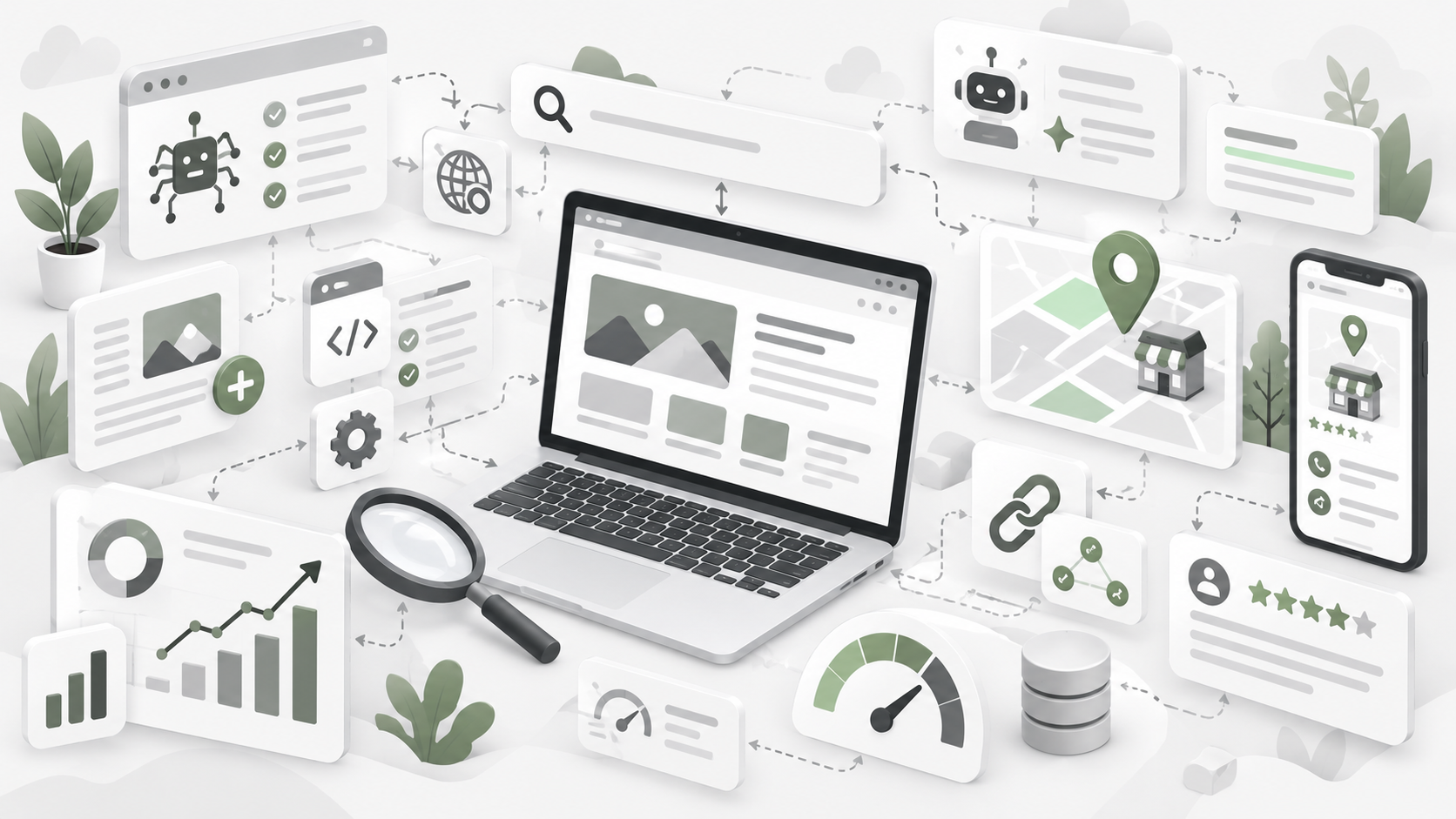
SEO focuses on three core areas: Content, Code, and Credibility, which correspond to the three main pillars of SEO: Technical, On-Page, and Off-Page.
Webmasters began optimising websites for search engines in the mid-1990s as the first search engines were cataloguing the early Web. The phrase “search engine optimisation” came into use in 1997, credited to SEO practitioner Bruce Clay for popularising the term. Since then, SEO has evolved dramatically-and it continues to do so.
In 2026–2027, SEO spans classic Google search, Google AI Overviews (AI Mode), Bing with Copilot Search, Perplexity, and other generative systems. Google’s ongoing AI Overviews rollout (2024–2026) means search results now include AI-generated summaries that pull from multiple sources. The rise of generative AI tools in the 2020s has led to the development of new optimisation approaches for AI-based search, referred to as answer engine optimisation (AEO) or generative engine optimisation (GEO).
SEO is crucial for improving a website’s visibility in search engine results, which can lead to increased organic traffic and higher conversion rates. Unlike paid advertising-where you buy placements in search results and social feeds-SEO builds compounding organic visibility over time.
This article is written from the perspective of a digital growth strategist serving UK SMEs, with a focus on WordPress-based sites.
How Search Engines Discover, Index and Rank Your Site
Understanding how search engines work helps you optimise effectively. The process involves three stages: crawling, indexing, and ranking.
Search engines use automated software, often called “crawlers” or “spiders,” that perform primary functions necessary for indexing web content. Googlebot and other crawlers follow links, read sitemaps, and render pages with CSS and JavaScript to understand content. Search engines primarily find pages through links from other pages they have already crawled, making backlinks crucial for SEO.
Once discovered, pages are indexed-stored in a massive database. When a user enters a query, the search engine retrieves relevant pages and ranks them based on hundreds of signals.
Main ranking signal groups include:
- Relevance: Does the content match the user’s search intent? Anticipating the search terms that users might use to find your content can positively influence how your site performs.
- Quality: Is the content comprehensive, original, and written with expertise? Creating content that is compelling and useful is likely to influence your website’s presence in search results more than any other SEO strategy.
- Usability: Is the page fast, mobile-friendly, and easy to navigate? Ensuring pages load quickly is crucial, as slow sites frustrate users and may rank lower.
- Authority: Does the site have credible backlinks and brand mentions? Search engines prioritise websites that are seen as trustworthy and authoritative.
Google has implemented numerous algorithm updates to improve search quality, including Panda (2011), Penguin (2012), Hummingbird (2013), and BERT (2019), reflecting the ongoing evolution of search technology. At Google I/O 2025, Google launched AI Mode, which breaks queries into sub-topics and draws from multiple URLs to generate comprehensive answers.
For a practical example, consider a plumber in Bristol. Their site needs local identifiers, business schema, accurate Google Business Profile data, and content answering common customer questions about costs and services.
Core SEO Pillars: Technical, On-Page, Off-Page
SEO focuses on three core areas: Content, Code, and Credibility. These translate into the three pillars every digital growth strategy must address.
Technical SEO
Technical SEO ensures the backend of a website is optimised for performance, enabling search engines to read and navigate it easily. In 2025–2026, key elements include:
- Core Web Vitals: Largest Contentful Paint (LCP), Cumulative Layout Shift (CLS), and Interaction to Next Paint (INP)
- Mobile-first indexing: Google predominantly uses the mobile version of a site for indexing and ranking, making mobile optimization essential
- HTTPS: Security is a ranking factor
- Crawlability and indexability: Clean robots.txt, XML sitemaps, canonical tags
- Structured data: Schema.org markup helps search engines understand your content
Mobile-friendliness is essential, as most searches occur on mobile devices, requiring layouts that adapt to smaller screens. In 2015, Google began promoting mobile search as a key feature, leading brands to shift towards mobile-first experiences.
Duplicate content can negatively impact SEO by wasting crawling resources and creating confusion for users; manage it effectively by using canonical tags or redirects. Organising your site in a logical way can help search engines and users understand how your pages relate to each other.
On-Page SEO
On-page SEO covers everything visible on your pages. Creating high-quality, relevant content that answers the questions your target audience is asking is essential for improving your site’s visibility and driving organic traffic.
Key elements include:
- Keyword research aligned with search intent
- Optimised title tags and headings (H1, H2, H3)
- Clear meta descriptions
- Using descriptive URLs can help users and search engines understand the content of a given page
- Internal linking to distribute authority
- Media optimisation (alt text, compression, lazy loading)
Off-Page SEO
Off-page SEO builds your site’s authority through external signals. Backlinks from reputable, high-quality websites serve as a “vote of confidence” in the eyes of search engines.
Tactics include digital PR, guest content, unlinked brand mentions, and local citations for businesses targeting geographic markets. AI tools can speed up audits and pattern detection, but strategy and prioritisation still require human judgement.
SEO as Part of a Digital Growth Strategy for UK SMEs
For UK SMEs, SEO is one component of a broader digital growth strategy. It supports every stage of the customer journey:
- Awareness: Ranking in search results puts your business in front of users actively searching
- Consideration: Content, case studies, and FAQs help prospects evaluate options
- Conversion: Optimised landing pages with clear calls-to-action turn visitors into leads
A well-executed SEO strategy can help SMEs compete effectively in a crowded digital marketplace by enhancing their online presence and brand visibility. A digital growth strategist will most likely bundle SEO with WordPress development, analytics, and paid advertising to create one integrated approach.
Concrete UK examples:
- Local SEO for a Bristol dentist: Google Business Profile optimisation, location pages, patient reviews, Local Business schema
- National SEO for a B2B SaaS company: Long-form educational content, case studies, industry backlinks, topical authority
- Multi-location SEO for a London chain: Borough-specific landing pages, separate GBP profiles, managed duplicate content
By optimising content for search engines, SMEs can ensure that their websites are more easily discovered by users, which is essential for driving traffic and engagement. SEO connects directly to digital transformation – improving data infrastructure, content processes, and technology integration.
Local vs National SEO: Timelines, Tactics and Budgets
Local SEO targets geographic queries-“near me” searches, Google map pack results, and city-specific terms. National SEO focuses on broader keyword competition across the entire UK or multiple markets.
Key differences:
Aspect | Local SEO | National SEO |
|---|---|---|
Primary focus | Google Business Profile, local citations, reviews | Content depth, authority backlinks, site architecture |
Timeline | 3–6 months for meaningful traction | 12–24 months for competitive rankings |
Budget (GBP) | £800–£1,500/month | £1,500–£5,000/month |
96% of users never click past the first page of search results, making higher rankings crucial for increased organic traffic and conversions. This statistic underscores why continuous improvement and sustained investment matter. |
For a Leeds electrician, local SEO might involve citation building on Yell, Thomson Local, and Free Index, plus review generation. For a London private healthcare clinic competing nationally, the focus shifts to comprehensive content, E-E-A-T signals, and building authority through digital PR.
Avoiding client conflicts:
- One local client per city or borough cluster
- Industry segmentation for national campaigns (SaaS vs e-commerce vs legal)
- Contractual exclusivity clauses where appropriate
Content, AI and “Search Everywhere” Optimisation
User behaviour in 2025–2026 spans Google Search, YouTube, Reddit, TikTok, social media platforms, and AI answer engines like Claude, ChatGPT and Perplexity. Writing content for just one channel leaves visibility on the table.
“Search everywhere optimisation” means structuring content so it performs across search engines, social search, forum posts, and AI-generated answers. SEO and content marketing are closely intertwined; effective SEO requires content that is not only optimised for search engines but also valuable and engaging for users.
AI-assisted content workflows include:
- Topic ideation: AI tools scan query volume, related questions, trend data
- Outline generation: Structured subtopic breakdowns and heading suggestions
- Draft creation: First drafts for blogs, FAQs, product descriptions
- Human editing: Ensuring factual accuracy, brand voice, and alignment with business goals
Regularly reviewing your key metrics and KPIs is essential for understanding what’s working and where there’s room for improvement in your SEO strategy.
E-E-A-T signals matter more than ever. Experience, expertise, authoritativeness, and trustworthiness help your content get cited by AI systems and rank in organic search results. Clear authorship, credentials, external references, and reviews all build trust.
Mix content formats:
- In-depth guides and pillar pages
- FAQ pages with schema markup
- How-to articles and video content
- Q&A pages designed for voice search

SEO vs Paid Advertising: How They Work Together
SEO and paid advertising (Google Ads, Meta ads, LinkedIn ads) should be combined in a single digital strategy, not treated as rivals.
Strengths of SEO:
- Compounding organic traffic over time
- Credibility in search results (users trust organic listings)
- Long-term cost efficiency once rankings establish
Strengths of paid advertising:
- Speed-ads generate leads immediately
- Precise targeting by audience, location, interest
- Testing new offers or keywords quickly
- Remarketing to site visitors
Optimising your content for search engines can increase your visibility and drive organic traffic to your site, which involves keyword optimisation and creating high-quality, relevant content. But ads accelerate results while SEO builds in the background.
Website owners at the SME level need integrated services, not fragmented vendors.
Common SEO Mistakes to Avoid in 2026–2027
Outdated tactics still circulate and can actively harm digital growth efforts. Avoid these common errors:
Chasing shortcuts or “guaranteed” rankings: Anyone promising page-one results in 30 days is likely using unsafe tactics. Google’s algorithms are opaque and constantly evolving.
Over-focusing on keywords instead of search intent: Creating content stuffed with keywords but failing to address what users actually want leads to poor rankings and high bounce rates.
Ignoring technical debt: WordPress sites accumulate plugin conflicts, slow hosting, unoptimised images, and broken links. These issues bottleneck even great content.
Buying low-quality backlinks: Google’s SpamBrain detects manipulative link patterns. Quality matters far more than quantity.
Misalignment with business goals: Generating traffic that doesn’t convert wastes resources. Vanity metrics (impressions, page views) without attention to leads and revenue create false confidence.
Ignoring AI-driven changes: Not monitoring how AI Overviews summarise your niche or brand could cost visibility. Structure content for AI summarisation-clear sections, FAQ schema, bullet lists.
Generic “SEO packages” that deliver blog posts with no strategy exemplify these mistakes. Discovery, analysis, and alignment with business objectives must come first.
FAQ
How long does SEO usually take to show results for a UK SME?
For a single-location UK SME starting in 2026–2027, expect 3–6 months to see meaningful local visibility improvements, assuming technical issues are fixed early. Competitive national rankings often take 12–24 months, especially in finance, legal, healthcare, and other high-competition sectors. Timelines shorten if the site already has authority, clean technical foundations, and a clear digital strategy connecting SEO to business goals.
Is SEO still worth it with AI Overviews and tools like ChatGPT changing search?
Absolutely. Users still begin their journeys in Google Search, YouTube, and other search engines, and AI systems draw from the same underlying web content. Optimising for AI Overviews and answer engines is effectively an extension of SEO, focused on clarity, structure, and authority signals. Businesses should see SEO as “search everywhere optimisation” rather than just competing for blue links on Google. The vast majority of discovery still flows through organic strategies.
Can I handle SEO myself, or do I need a digital growth strategist?
Some Website owners can manage basic tasks – Google Business Profile updates, simple on-page edits, content updates-but competitive sectors and multi-channel strategies will always benefit from expert help. A digital growth strategist coordinates SEO, WordPress, analytics, AI workflows, and paid ads into one coherent plan tied to revenue goals. Consider your time, the complexity of your industry, and your growth targets when deciding between DIY and partnering with a specialist who can build trust through demonstrated expertise.
How does SEO interact with my existing sales and offline marketing?
SEO supports existing sales processes by generating warmer, better-informed leads who discover your business through search engines. Use SEO insights-keywords, content performance, common questions-to refine sales scripts, brochures, and email campaigns. The most effective digital growth strategies integrate online and offline touchpoints into one joined-up customer journey. Brand visibility online reinforces credibility offline, and offline mentions drive branded searches that strengthen organic authority.